Road Tripping Kyrgyzstan With Kids: Our 2 Week Itinerary & Where We Stayed
Updated: Sep 2
We hired a car in Bishkek and spent 2 weeks road-tripping through Kyrgyzstan with our kids, travelling from Issyk-Kul and Jyrgalan to Tash Rabat and a very snowy Song Kul.
In this guide, I’ll share our exact route, the places we loved most and where we stayed along the way — including the yurt camps and guesthouses we’d happily recommend if you’re planning your own Kyrgyzstan road trip.

For 2 weeks, travelled through Kyrgyzstan with our kids, a trusty rental car, and a thirst for adventure, winding our way through the country with no set plan.
Hiring a car gave us the freedom to stop wherever we wanted. Along the way, we picked up hitchhikers, got caught in snowstorms, drove some seriously beautiful mountain roads and slept in cosy yurts.
And we loved it!
Kyrgyzstan turned out to be one of the biggest surprises of our Central Asia trip — wild, beautiful and one of our favourite countries to explore as a family.
Bishkek → Tosor → Karakol → Jyrgalan → Jeti-Ögüz → Skazka Canyon → Bokonbaevo → Naryn → Tash Rabat → Song Kul → Bishkek
Arriving in Bishkek
Our adventure began in Bishkek, where we happened to arrive right in the middle of Kyrgyzstan’s Independence Day celebrations.
The city was buzzing with food stalls, music, families gathering in the parks and amusement rides for the kids. It was such a fun introduction to Kyrgyzstan — and the girls loved it.
We stayed at Apple Hostel, which was a great base for our first night in Bishkek. It was comfortable, affordable and really convenient before picking up our rental car the following morning.

Driving Through Kyrgyzstan
Driving in Kyrgyzstan is an adventure in itself.
Some roads are smooth, while others quickly turn into rough dirt tracks winding through remote mountain valleys. Outside the cities, road markings often disappear completely, and you’ll regularly share the road with sheep, cows, horses, donkeys, and the occasional camel.
But despite the rough roads, we always felt safe driving here.
If you’re planning your own trip, I’ve written a helpful guide on what it’s really like driving in Kyrgyzstan.
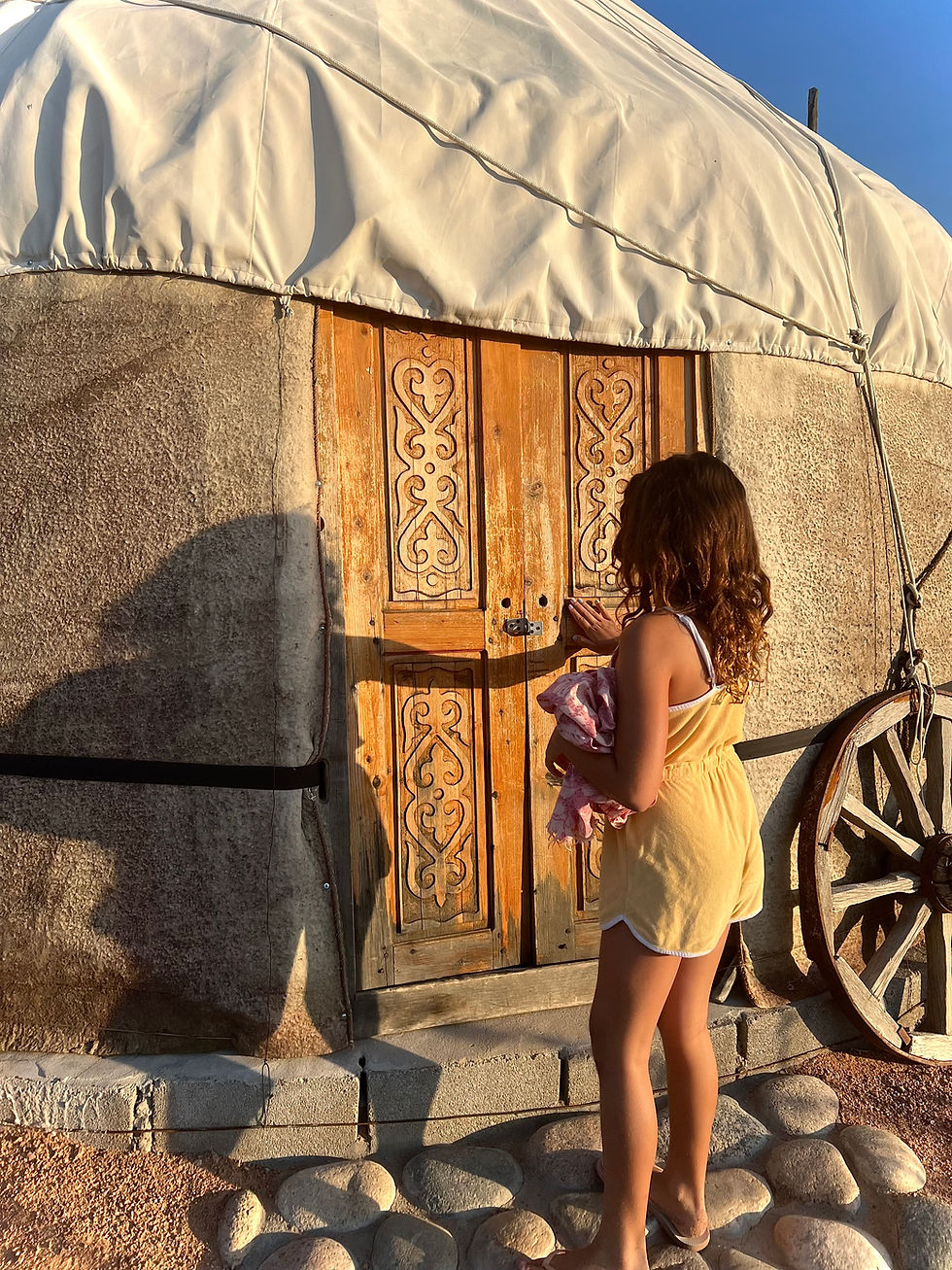
Issyk-Kul Lake & Our First Yurt Stay
From Bishkek, we headed east toward Issyk-Kul Lake, one of Kyrgyzstan’s most iconic landscapes.
We spent our first night at Yurt Camp Tosor, along the quieter southern shore of the lake. The yurt was simple but warm and cosy, and it became our first real glimpse into Kyrgyz nomadic culture.
If you’re road-tripping around the southern side of Issyk-Kul, we’d absolutely recommend staying here.
Travelling with kids? I’ve also written about what it’s really like staying in a yurt in Kyrgyzstan with kids.

Next Stop: Jyrgalan
After stocking up on supplies and cash in Karakol, we headed deeper into the mountains towards the tiny village of Jyrgalan, where we spent three nights at Jyrgalan Yurt Lodge.
As we climbed higher, the weather completely changed. Rain rolled in, clouds covered the mountains and the temperature dropped quickly. By the time we arrived, it was cold, wet and misty.
Our yurt was simple but incredibly cosy. The fire was lit for us when we arrived and before long we were warm inside, playing cards and reading while the rain battered down outside.
We absolutely loved staying here. The hosts were lovely, the bathrooms were by far the nicest and cleanest we came across at a yurt stay — they even had heated floors! — and the whole place felt wonderfully remote.
And then we woke up the next morning. The clouds had disappeared and the mountains surrounding us were covered in fresh snow. It was absolutely magical.
We spent our days exploring the trails around Jyrgalan, hiking through alpine meadows towards Horse Head Rock and Kok Bel, surrounded by snow-dusted mountains and not another person around.
There’s a tiny tourist information point in the village - look for a turquoise house - where we picked up maps and advice on the local walks, including plenty of easier options for families.
We stayed for 3 nights and I’m so glad we did. If you’re adding Jyrgalan to your Kyrgyzstan road trip, we’d absolutely recommend Jyrgalan Yurt Lodge.

Seven Bulls & Skazka Canyon
Leaving Jyrgalan, we made our way back along the southern shore of Issyk-Kul, stopping at the famous Seven Bulls (Jeti-Ögüz) rock formations along the way.
We had a wander around the huge red cliffs and stopped for a picnic beside the river before continuing towards Skazka Canyon.

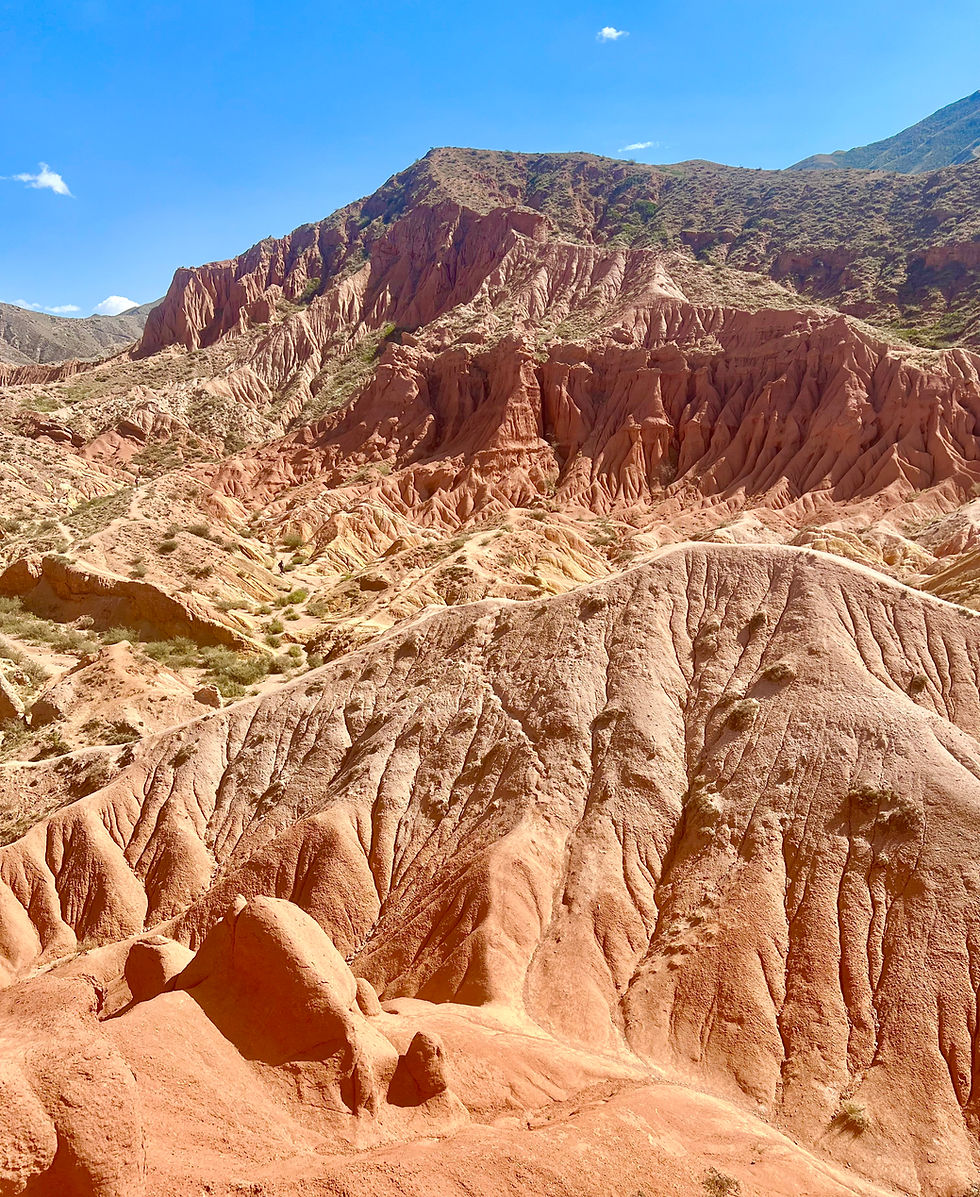
Not long after, the landscape changed completely as we reached Skazka Canyon (Fairytale Canyon), with its incredible red and burnt-orange rock formations.
We hiked up the narrow ridge known as Dragon’s Back. It’s steep in parts, but the views from the top over the canyon and across to Issyk-Kul are absolutely worth it.
Skazka was an easy stop along our route and definitely one we’d recommend adding to a Kyrgyzstan road trip.
Bokonbaevo & Eagle Hunting Traditions
Continuing west along the lake, we arrived in the small town of Bokonbaevo, known for its traditional eagle hunters.
We stayed at Sonun Yurt Camp, and they organised an eagle-hunting demonstration with a local family for us. We learned about the centuries-old tradition of hunting with eagles and dogs, our girls also tried archery and horse riding afterwards. It was such a fascinating glimpse into Kyrgyz culture & easily one of our favourite things to do in Kyrgyzstan with kids.

Aksai Canyon
Later that afternoon, we explored Aksai Canyon, a quieter and lesser-known spot near Bokonbaevo. It felt wilder than Skazka — we had the whole place to ourselves as we drove between layered cliffs and dirt roads.

Next Stop: Tash Rabat
From Bokonbaevo, we continued south through Naryn and deeper into the mountains towards Tash Rabat, a 15th-century Silk Road caravanserai near the Chinese border.
The further we drove, the emptier the landscape became — rough mountain roads, wandering horses and yurts scattered through huge valleys.
Tash Rabat ended up being one of the absolute highlights of our Kyrgyzstan road trip, and this was also our favourite yurt stay of the entire trip.
We stayed at As a Nomad Tash Rabat Yurt Camp, tucked beneath the mountains near Tash Rabat. Our host was incredibly caring and looked after us so well, and it was one of those stays that we still talk about. If I had to recommend just one yurt stay from our Kyrgyzstan road trip, this would be it.
We loved Tash Rabat so much that I wrote a separate guide to visiting Tash Rabat, including how to get there, where we stayed and what it’s really like visiting with kids.

Song Kul: Snowstorms & Yurts
From Tash Rabat, we made our way towards Song Kul Lake — and this turned into one of the wildest drives of our trip.
The road climbed higher and higher into the mountains until eventually the whole world turned white. Snow covered everything — including the road.
At times, we genuinely had no idea where the road actually was.
After a few wrong turns and plenty of laughing, we eventually found a yurt camp for a few nights. We were completely unprepared for just how cold Central Asia could get in early autumn.
Life at Song Kul felt beautifully simple.
The kids collected dried cow dung for the stove (which they found hilarious). It's the main fuel source up here, it burns surprisingly well - and no, it doesn’t smell. We rode horses across the plains, played archery, and watched herds slowly move through the misty white landscape.
Just horses, yurts, snow, and endless sky.

Kyrgyzstan isn’t polished — it’s raw, real and wildly beautiful.
It’s hard to fully put into words just how special this road trip was. From waking up to snow-covered mountains and sleeping in cosy yurts to eagle hunters, wild horses and some of the most incredible drives we’ve ever done, Kyrgyzstan completely surprised us.
If you’re dreaming of a family adventure that feels a little different, go to Kyrgyzstan. We absolutely loved it!
Planning Your Own Central Asia Family Adventure?
If you’re planning a similar trip, these guides will help:
Because so much of Kyrgyzstan is remote — especially places like Song Kul and Tash Rabat — travel insurance was one thing we made sure we organised before the trip.
For trips like this, check quotes with World Nomads, they offer insurance for more than 150 activities.
We receive a fee when you get a quote from World Nomads using this link. We do not represent World Nomads. This is not a recommendation to buy travel insurance.
This post contains affiliate links. If you book or buy something through these, I may earn a small commission at no extra cost to you. Thank you so much for supporting this blog - it helps us keep sharing family travel inspiration


Comments